
- English
- Español
- Português
- русский
- Français
- 日本語
- Deutsch
- tiếng Việt
- Italiano
- Nederlands
- ภาษาไทย
- Polski
- 한국어
- Svenska
- magyar
- Malay
- বাংলা ভাষার
- Dansk
- Suomi
- हिन्दी
- Pilipino
- Türkçe
- Gaeilge
- العربية
- Indonesia
- Norsk
- تمل
- český
- ελληνικά
- український
- Javanese
- فارسی
- தமிழ்
- తెలుగు
- नेपाली
- Burmese
- български
- ລາວ
- Latine
- Қазақша
- Euskal
- Azərbaycan
- Slovenský jazyk
- Македонски
- Lietuvos
- Eesti Keel
- Română
- Slovenski
- मराठी
- Srpski језик
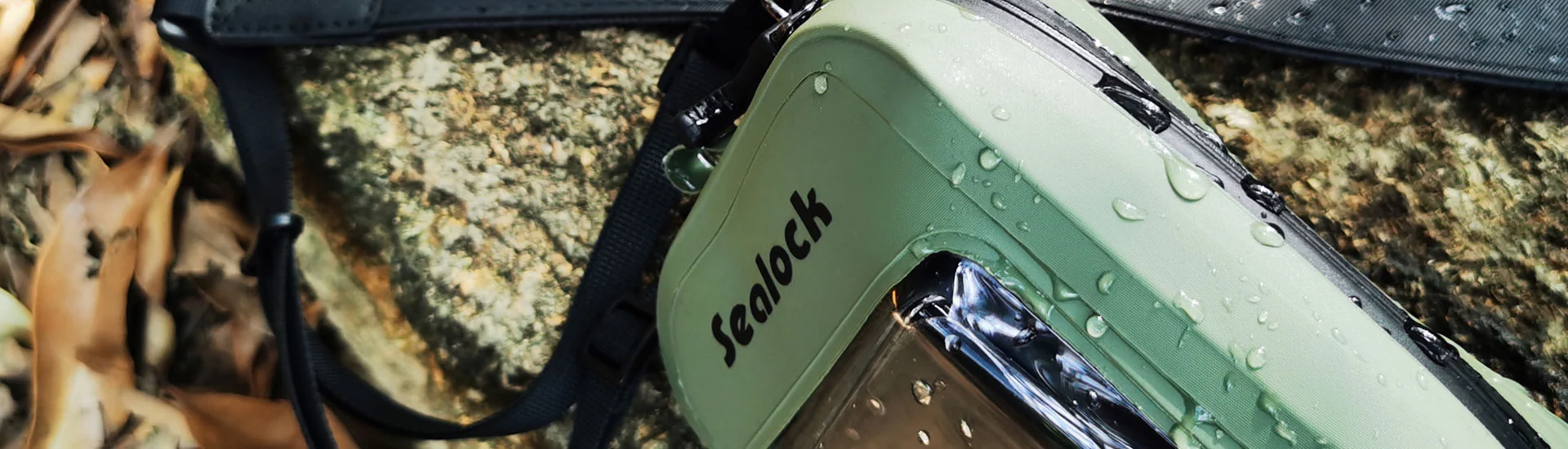
Heavy Duty Waterproof Duffel Bags for Commercial Use
Sealock manufactures heavy duty waterproof duffel bags for commercial fleets, marine operators, outfitters, and institutional buyers from factories in China and Vietnam. Buying duffels for an organisation is a different exercise from buying them for a store. The unit price matters less than the replacement cycle, the specification has to hold across every bag issued, and a failure in the field is an operational problem rather than a return. This sets out what "heavy duty" has to mean at commercial grade, and what a fleet specification should contain.
1. Company and Production Base
Sealock (YiFuLong Outdoor Gear Co., Ltd.) has built welded waterproof bags for over 20 years, producing for international outdoor and marine brands including West Marine, Musto, Helly Hansen, and attwood.
- Established: 2003
- Facilities: Dongguan, China | Ho Chi Minh City, Vietnam — either origin available on any model
- Certifications: ISO 9001, BSCI, SMETA, HIGG, GRS, SCAN
- Terms: MOQ 300 pcs per model, samples 7–15 days, bulk 30–45 days, FOB Guangdong
2. Commercial Buying Is a Cost-of-Ownership Calculation
A retail buyer optimises for margin per unit. A commercial buyer is really purchasing a service life: a bag issued to a crew member or a field team is used daily, often by different people, and replaced on a cycle. The relevant number is cost per year in service, not cost per bag — a unit that costs more and lasts three times as long is the cheaper purchase, and the downtime and re-issue administration around a failure usually cost more than the bag itself.
That reframing changes the specification. Commercial buyers should be specifying load ratings, hardware grade, base construction, and test evidence, not colours and capacities — and should expect a supplier to provide documentation rather than adjectives.
3. What "Heavy Duty" Has to Mean on a Commercial Duffel
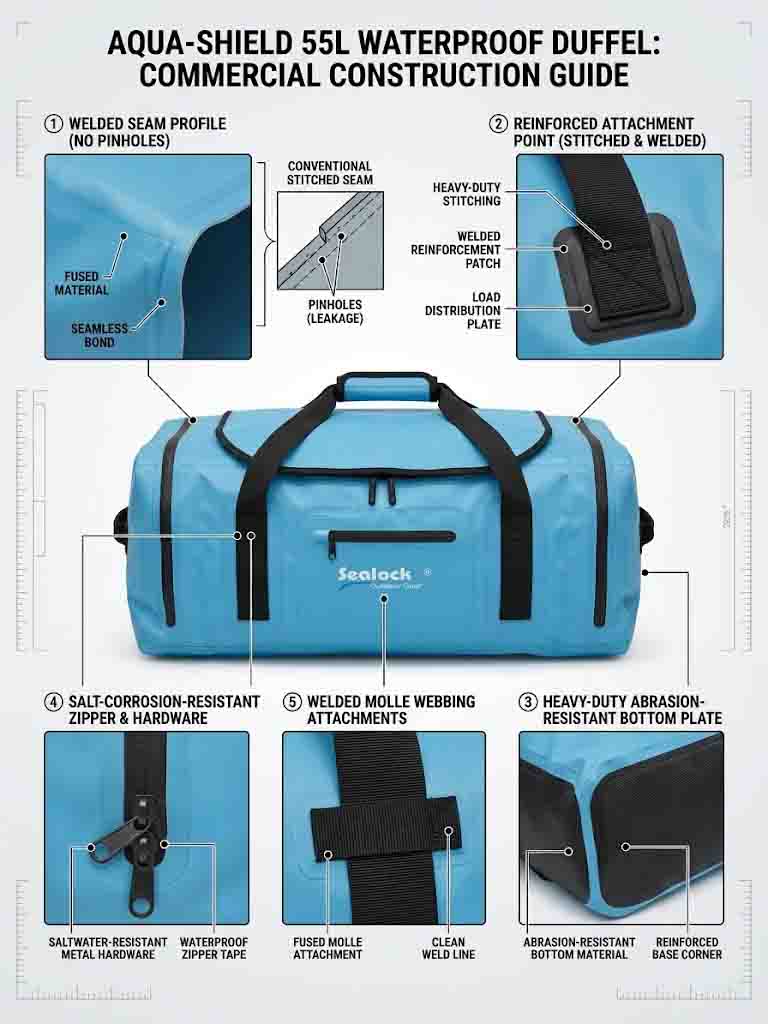
The term is unregulated, so it needs defining in the specification. Five construction elements separate commercial grade from consumer:
- Welded seams, not stitched. Traditional stitched seams put thousands of micro-perforations through the fabric that behave like a sieve under hydrostatic pressure or heavy spray. Welded construction fuses the layers into a continuous barrier with no leak path — non-negotiable at commercial grade.
- Bar-tacked and reinforced stress points. Critical seams, strap attachments, and handles need dense reinforcement stitching that distributes load stress far more effectively than standard stitching, backed by welded reinforcement patches so the anchor load never relies on thread through the membrane alone.
- A specified base panel. A heavy-duty tarpaulin or reinforced abrasion base is essential for bags that will be set down on wet, rough ground — decks, quaysides, truck beds, and yards.
- Marine-grade closure hardware. Commercial-grade bags use premium fasteners specifically to prevent salt-crusting seize and hardware failure during offshore operations. On a fleet, a seized zipper is a bag out of service.
- Modular attachment where relevant. Welded MOLLE-style lash strips turn a duffel from simple storage into a configurable load-carriage platform, adding external capacity without piercing the waterproof shell.
4. Specify a Load Rating, Not a Fabric
The most useful line a commercial buyer can add to a specification is the weight the bag must carry and how that is verified. Because a duffel has no harness to distribute load, everything runs through the handles, strap anchors, and base — which is where commercial bags fail. Military-pattern duffels are routinely specified to carry loads in excess of 30 kg, and a commercial specification should state its own figure rather than inherit an assumption.
Sealock tests to that logic: load cycling over 1,500 cycles at handles, strap anchors, and D-rings, with pull testing on the same points. On the 55L model, reinforced webbing handles plus a side grab handle support hand carry, shoulder carry, and a two-person lift for heavy loads — the last of which matters when a bag is being passed across a gunwale or loaded into a vehicle by two people.
5. Capacity Bands for Commercial Deployment
| Capacity | Commercial application |
|---|---|
| 20–30L | Tool and maintenance kit, personal effects for a shift, electronics and documents |
| 40–60L | The standard band for commercial crew shifts and multi-day deployments |
| 70L+ | Team equipment, expedition and field deployment, bulk gear transport |
For fleet standardisation, two sizes usually cover an operation better than four: one personal-issue bag and one team or equipment bag. Fewer SKUs simplifies re-issue, stock holding, and replacement ordering.
6. Fleet Features Worth Specifying
- Asset identification. Hook-and-loop patch panels take team, unit, or ID patches, and welded or printed numbering supports asset tracking across an issued fleet.
- Standardised colourway. A single Pantone-matched colour across the fleet, with high-visibility options where deck safety or rapid identification matters.
- Configurable compartments. Independent sealed end compartments separate wet, dirty, or contaminated kit from clean equipment — relevant for crews handling fuel, fish, or field gear.
- Detachable pouches and removable straps. Modularity lets one platform serve several roles, and removable backpack straps allow a long approach on foot before the bag reverts to a clean duffel profile.
- Glove-operable closures. Moulded T-grip zipper pulls give the leverage an airtight zipper needs with cold, wet, or gloved hands — a small detail that determines whether a seal actually gets closed properly in service.
7. Material Choice for Commercial Duty
Professional crews use both materials, and the choice follows the environment rather than a hierarchy. PVC tarpaulin is favoured for heavy-duty commercial use, where absolute waterproofing, abrasion resistance, and cost per unit outweigh weight — marine, industrial, and high-abrasion deployments. TPU is chosen where lighter weight, cold flexibility, chemical and oil resistance, and longer service life under UV and moisture matter more, and where hydrolysis resistance is relevant for bags stored humid or shipped through tropical lanes. The detailed cases are set out in the TPU duffel performance guide and the PVC cost and performance guide. Whichever body fabric, specify a reinforced base and UV-stable material for equipment that lives outdoors.
8. Documentation for Tender and Vendor Approval
Commercial and institutional purchases usually require evidence, not claims. Available documentation covers the laboratory suite — full water immersion, load cycling over 1,500 cycles, 3,000 sealed-zipper cycles, tensile and bonding strength, salt spray for marine hardware, friction resistance, colour fastness, and colour difference — alongside compliance under ISO 9001, BSCI, SMETA, HIGG, GRS, and SCAN.
On technical duffels a 100% inflation and leak-testing gate is applied after assembly, with technicians manually verifying the top closure zipper and base welding points, and only units holding structural volume without deviation passing to clearance. The full customer inspection procedure — unboxing, vacuum extraction, a 24-hour static rest, and air-leak determination — can be witnessed end to end by a buyer's inspector, and third-party inspection through SGS or QIMA is available. Standards and defect classification are set out in the quality control standards for waterproof production.
9. Commercial-Grade Range
Models organized by type rather than priority:
| Image | Model | Capacity | Material | Commercial features | Product Page |
|---|---|---|---|---|---|
|
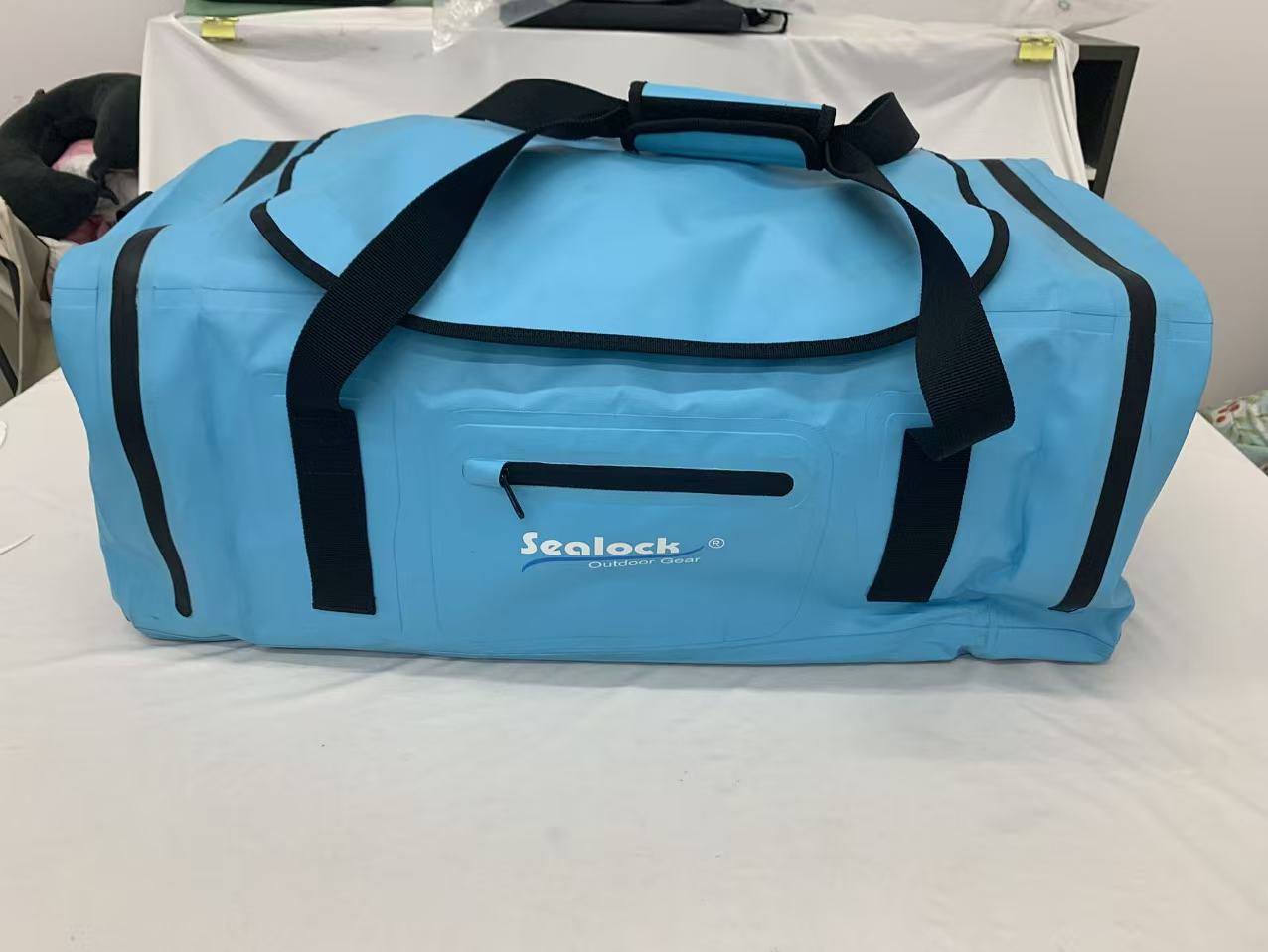
SL-C594 | 55L | 500D PVC (TPU option) | IPX7 · two sealed end compartments · two-person carry · abrasion base | View |
|
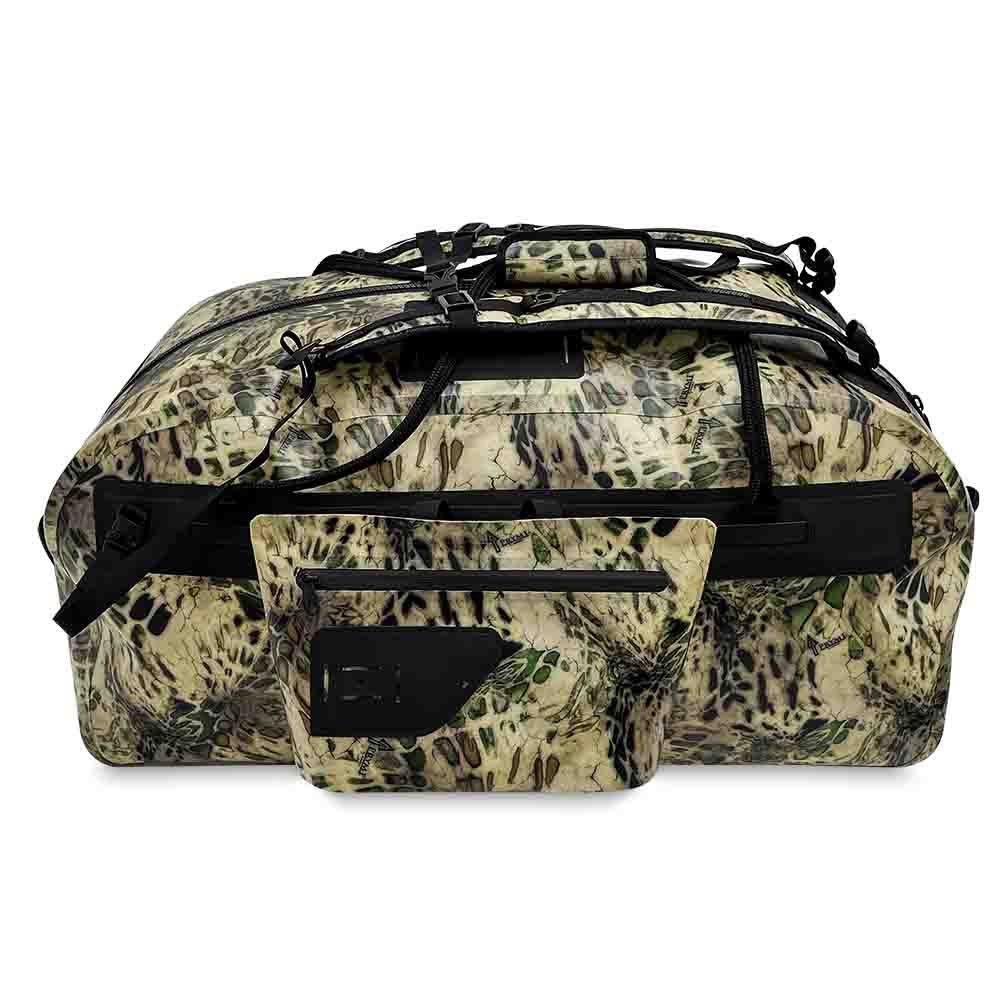
SL-C893 | 70L | Printed TPU laminate | IPX6 · welded MOLLE · patch panels · removable backpack straps · reinforced base | View |
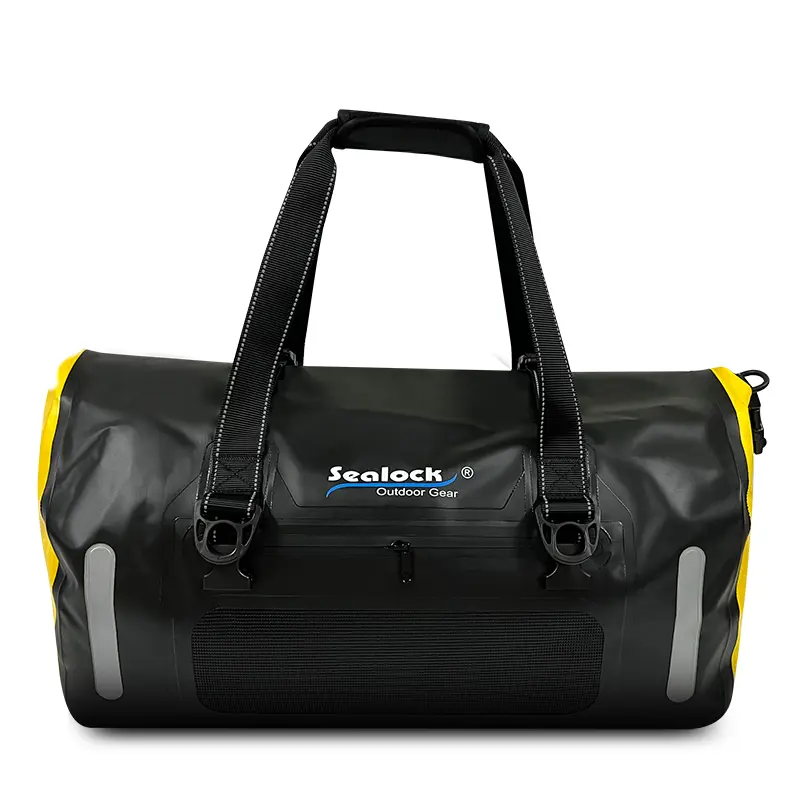
|
SL-K099 | 40 / 60L | 840D TPU | IPX7 · roll-top · removable strap | View |

|
SL-C067 | 60L | 500D PVC | Roll-top · high-visibility yellow | View |

|
SL-C080 | 40 / 60L | 420D TPU | Roll-top · lighter fleet option | View |
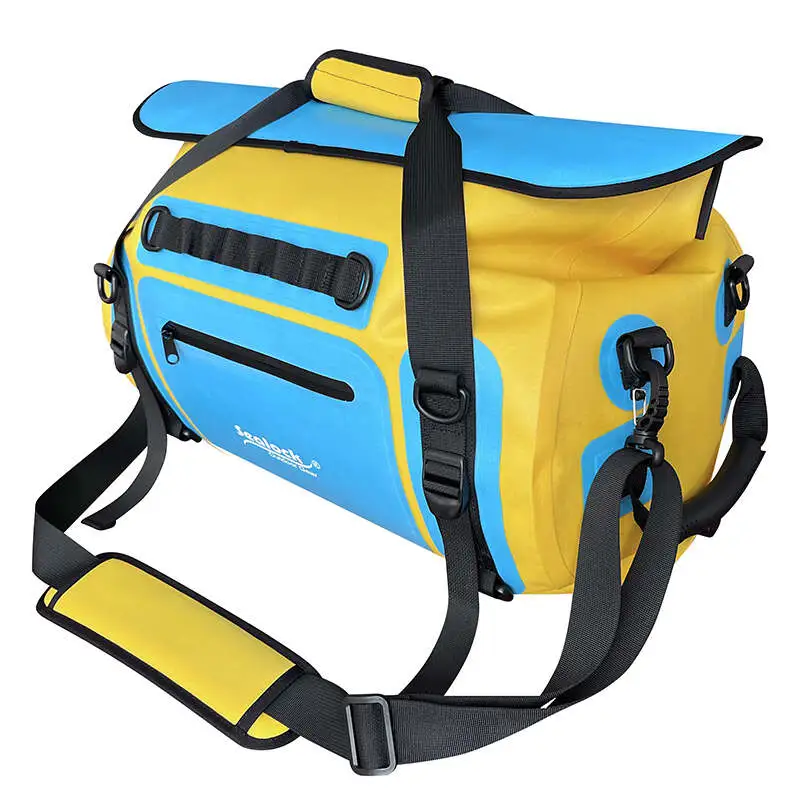
|
SL-C261 | 30L | TPU composite | IPX8 zipper · foldable · tool and shift kit | View |
Higher deniers and reinforced base upgrades are available as specified options across these platforms. Full categories sit under duffels, dry bags, and dry backpacks. Fleet customisation scope is covered in the guide to OEM duffel factory customization, and the engineering behind duffel load paths in the guide for global wholesale duffel buyers.
10. FAQ
Q: What should a commercial specification actually contain?
A: A stated load rating with a verification method, welded seam construction, base panel specification, hardware grade including corrosion resistance, the IPX rating tied to a named test, and the documentation required for vendor approval. Colour and capacity are the easy part; these are what determine service life.
Q: Why do commercial duffels fail?
A: At the anchors and the base, not the fabric. A duffel has no harness to spread load, so handles, strap anchors, and the bottom panel absorb everything, under repeated lifting, dragging, and setting down. Reinforced patch-backed anchors, bar-tacking, and a heavy base are what extend service life.
Q: Is stitched-and-taped construction acceptable for commercial marine use?
A: No. Stitching perforates the waterproof layer thousands of times and the tape covering those holes lifts with flexing, heat, and age. Welded seams are the baseline for sustained offshore and industrial exposure.
Q: PVC or TPU for a fleet?
A: Both are used professionally. PVC suits heavy-duty commercial work where absolute waterproofing, abrasion resistance, and unit cost lead. TPU suits fleets needing lighter weight, cold flexibility, chemical resistance, and longer life under UV and moisture. Match it to the operating environment, not to a hierarchy.
Q: Can bags be marked for asset tracking across an issued fleet?
A: Yes — hook-and-loop patch panels for unit or team patches, welded or printed numbering, and a standardised Pantone colourway. Specify the identification method at the enquiry so it is built in rather than added afterwards.
Q: What evidence can you supply for a tender?
A: Test results across immersion, load cycling, zipper cycling, tensile and bonding strength, salt spray, and colour consistency, plus certification paperwork and third-party pre-shipment inspection. Buyers can also witness the inflation and vacuum leak-testing procedures directly.
Request Commercial Specifications
For load ratings, fleet configuration, test documentation, or an OEM proposal for an institutional programme, submit an inquiry. Sealock responds to procurement enquiries within 24 hours, with production from Dongguan, China or Ho Chi Minh City, Vietnam.